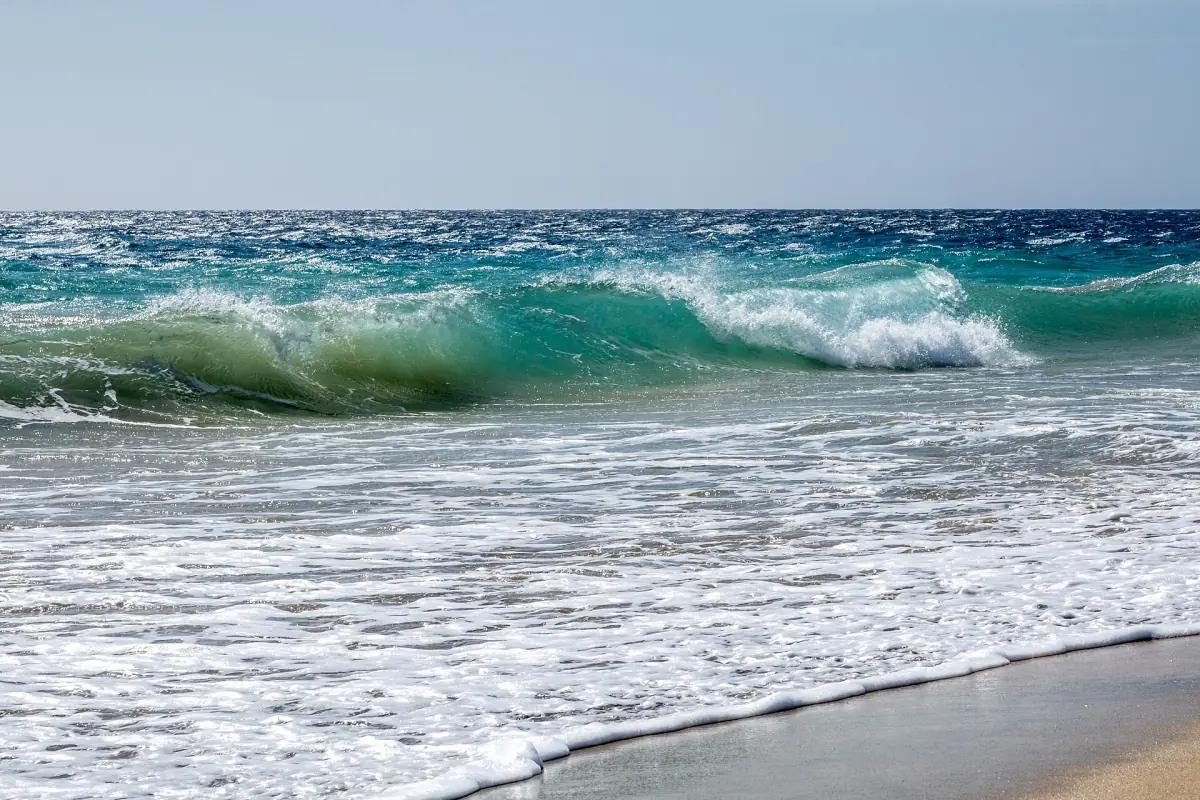
Fuerteventura weather at a glance
The figures on this page come from the Spanish state weather service, AEMET, for the station at Fuerteventura Airport, 25 m above sea level, close to Puerto del Rosario. They are long-term monthly averages for the period 1981 to 2010. They describe the typical climate at that spot. They are not a forecast and not a record of 2026.
On that basis the island is dry. Added together, the monthly rainfall comes to about 97 mm a year. June, July and August record 0 mm, and December is the wettest month at 26 mm. The warmest month is August, with an average high of 27.8 °C. January is the coolest, with an average high of 20.6 °C and a low of 14.7 °C.
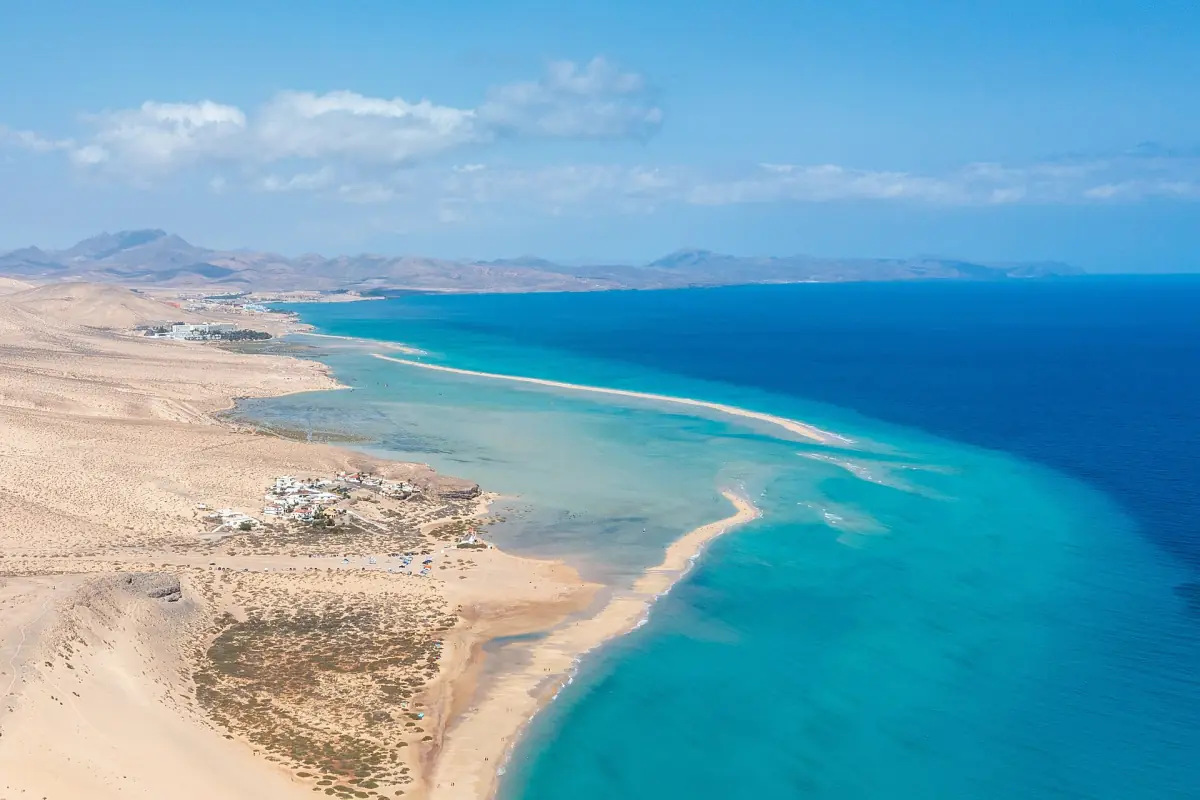
Climate by month
AEMET averages, Fuerteventura Airport station, 1981 to 2010.
| Month | Average high °C | Average low °C | Mean °C | Rain mm | Sunshine hours |
|---|---|---|---|---|---|
| January | 20.6 | 14.7 | 17.6 | 14 | 190 |
| February | 21.0 | 14.8 | 17.9 | 16 | 190 |
| March | 22.2 | 15.5 | 18.9 | 12 | 233 |
| April | 22.9 | 16.0 | 19.5 | 5 | 242 |
| May | 24.1 | 17.1 | 20.6 | 1 | 280 |
| June | 25.8 | 19.1 | 22.5 | 0 | 285 |
| July | 27.3 | 20.8 | 24.0 | 0 | 294 |
| August | 27.8 | 21.5 | 24.6 | 0 | 289 |
| September | 27.5 | 21.2 | 24.4 | 2 | 246 |
| October | 26.1 | 19.8 | 22.9 | 8 | 227 |
| November | 24.0 | 17.7 | 20.9 | 13 | 203 |
| December | 22.0 | 15.9 | 18.9 | 26 | 186 |
High and low are monthly means of the daily maximum and minimum, not record values. Rainfall is the average monthly total, and sunshine is the average total for the month. A rounded 0 mm does not guarantee a dry day.
What the table suggests for your trip
Read it as a guide, not a promise.
Summer: June to September
Rain is close to zero, with highs of 25.8 to 27.8 °C and lows above 19 °C. Sunshine runs from 246 to 294 hours a month. This is the stretch with the least rain and the most sun.
Winter: December to February
Highs stay between 20.6 and 22.0 °C and lows between 14.7 and 15.9 °C. December brings the most rain of the year, 26 mm on average, and sunshine drops to 186 to 190 hours. It suits hiking and sightseeing in the capital and Betancuria more than a long beach day.
Betancuria →Spring: March to May
Highs climb from 22.2 to 24.1 °C and rain falls from 12 mm to 1 mm. Sunshine rises from 233 to 280 hours a month.
Autumn: October and November
October averages a high of 26.1 °C, a low of 19.8 °C, 8 mm of rain and 227 hours of sunshine. November cools to 24.0 °C and 13 mm.
Fuerteventura tours for any weather
Boat trips, jeep safaris and Isla de Lobos tickets, with live prices and availability.
Sea, wind, calima and warnings
What the monthly table does not cover.
Sea temperature
This page has no monthly sea-temperature table. Check AEMET's beach forecast for your own dates, for example for Caleta de Fuste.
Caleta de Fuste →Calima
Calima is a dust haze that can reach the islands. The Canary Islands health authority advises sensitive people to stay indoors more, avoid hard exercise outdoors and keep doors and windows closed during such episodes. Follow the official notices when one is announced.
Rain and warnings
Check the current warnings and forecast before a boat trip or a hike.
Red flags
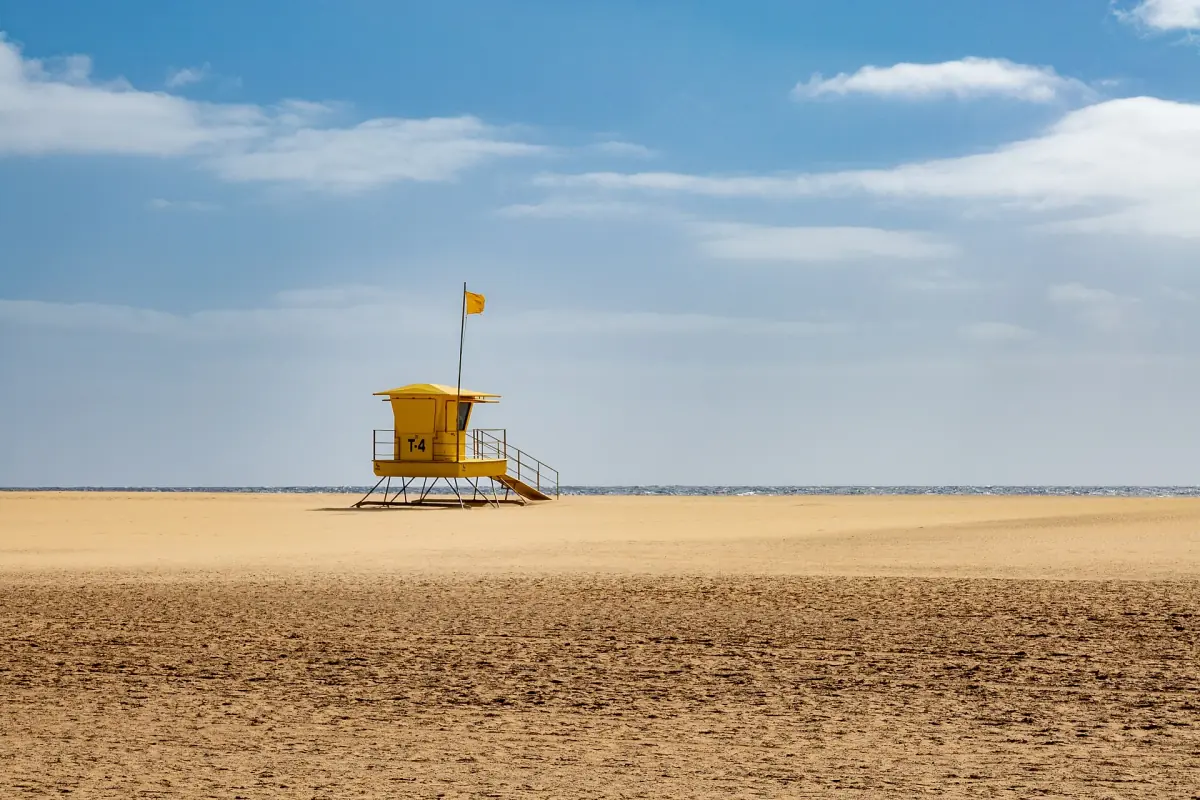
A red flag on a beach means swimming is banned. Follow the lifeguards, do not swim alone and keep an eye on children.
Beaches →Plan around the weather
Pages that help once you know the season.
Fuerteventura weather: frequently asked questions
What is the weather like in October?
The long-term average for October is a high of 26.1 °C, a low of 19.8 °C, 8 mm of rain and 227 hours of sunshine. Check the current warnings and forecast before you go.
Which month is the driest?
June, July and August average 0 mm in the long-term table. A rounded 0 mm is not a guarantee of a dry day.
When is the island warmest?
August has the highest average high at 27.8 °C and the highest average low at 21.5 °C. September is close, with 27.5 °C.
How warm is the sea?
There is no monthly sea table on this page. Check AEMET's beach forecast for your own dates.
What is calima?
It is a haze of dust in the air. During an episode the Canary Islands health authority advises sensitive people to reduce time outdoors, avoid hard effort and close doors and windows.
How much sun does Fuerteventura get in winter?
The long-term average is 190 hours in January, 190 in February and 186 in December, which is about 6 hours a day.