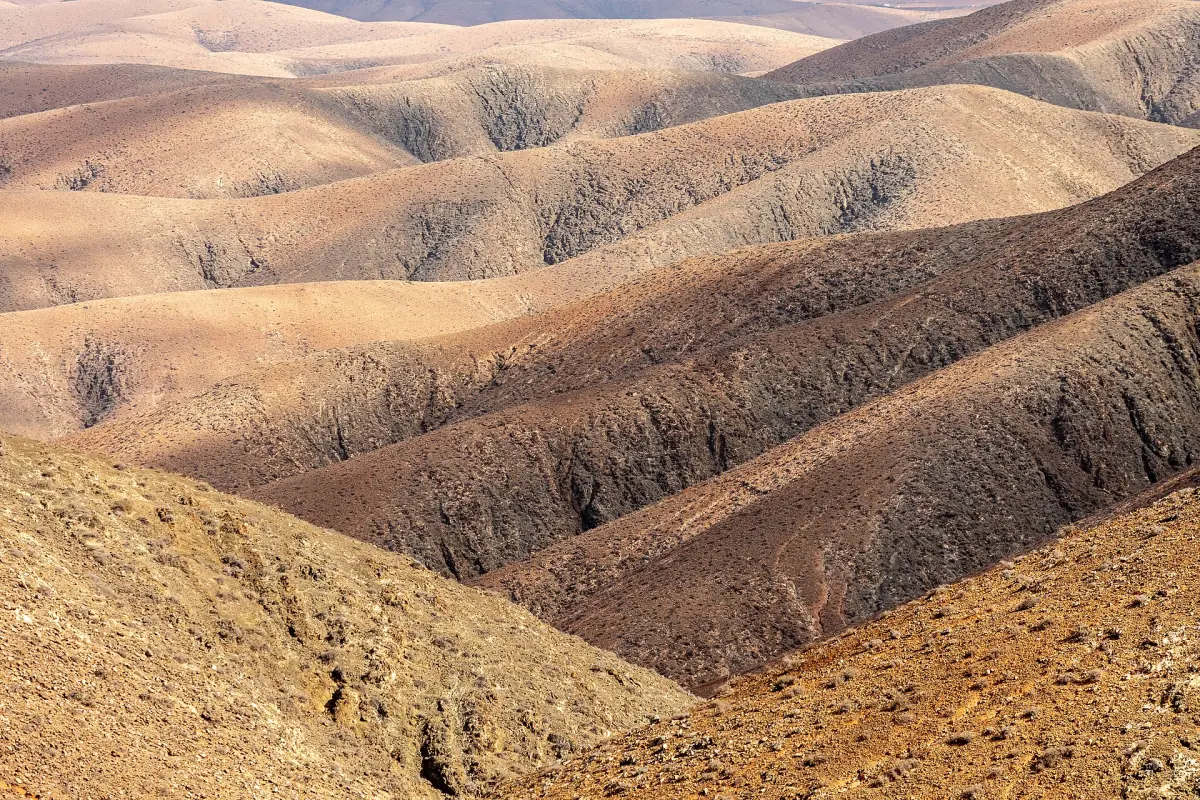
Fuerteventura from the capital
Puerto del Rosario is Fuerteventura's capital and its main port. The airport is at El Matorral, about 5 km away, so many visitors pass through the town without stopping. It is a working administrative town, not a beach resort. The well-known sights lie in the north, the centre and the south of the island.
This page lists twelve of them as a starting point. The selection is editorial, not an official ranking, and nobody should try all twelve in one day. Distances on the island are long, and some places are better combined with a night away. This is an independent guide, not run by the town hall, the island council or any tour company.
The capital and the north (1 to 4)
The town itself, the port village of Corralejo and two protected areas.
1. Puerto del Rosario and its sculptures
Public art stands along streets, squares and roundabouts. It is free and has no opening hours. Named pieces include Fuente de la Explanada, Caracolas, Pescador de Viejas and Ofrenda al Mar. Published counts of the sculptures differ a lot, so treat any single number with care.
Things to do in town →2. Corralejo
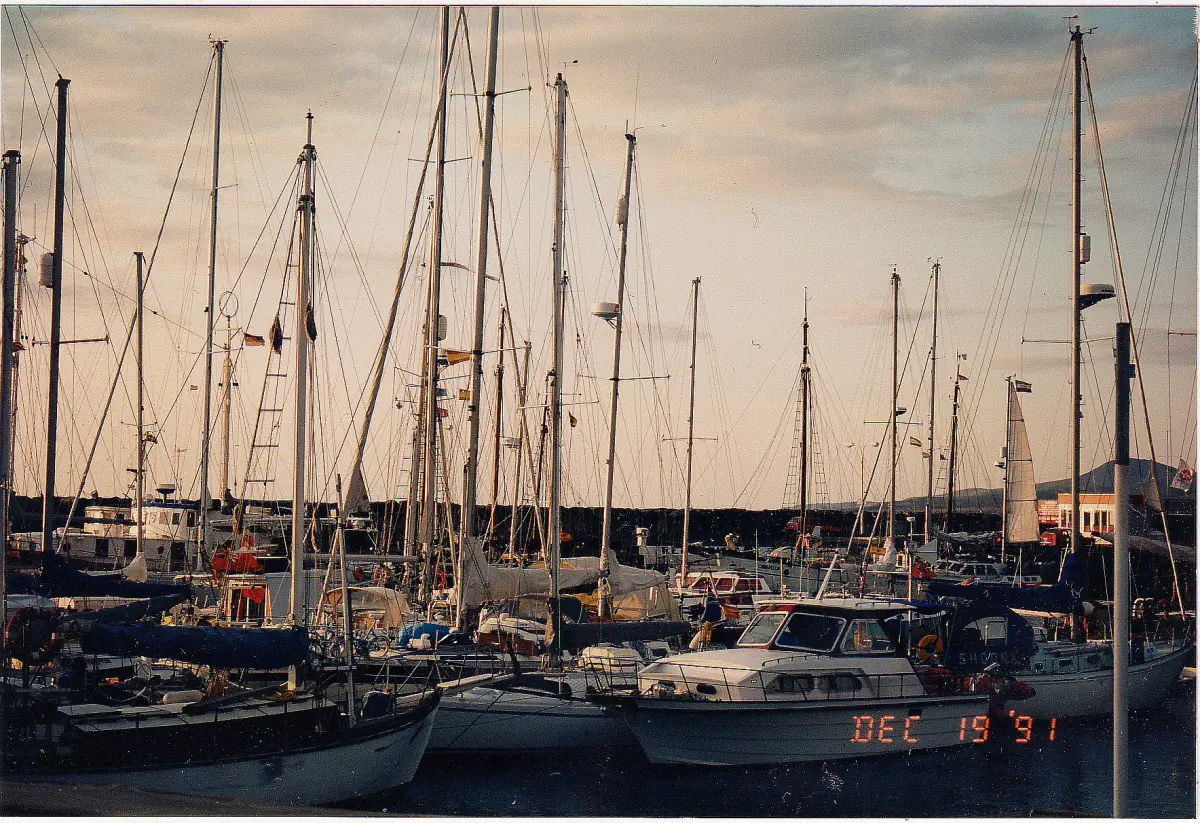
The harbour town in the north is where boats leave for Isla de Lobos and for Lanzarote. Bus line 6 links it with the capital, with a published fare of €3.40 each way. Check the current timetable before you go.
Corralejo guide →3. The Corralejo dunes
The natural park is a coastal strip of 2.5 × 10.5 km in the north-east, with a dune area in the north and a volcanic sector in the south. Leave your car at a pull-off, walk in on the marked paths and take your rubbish with you.
Dunes and rules →4. Isla de Lobos
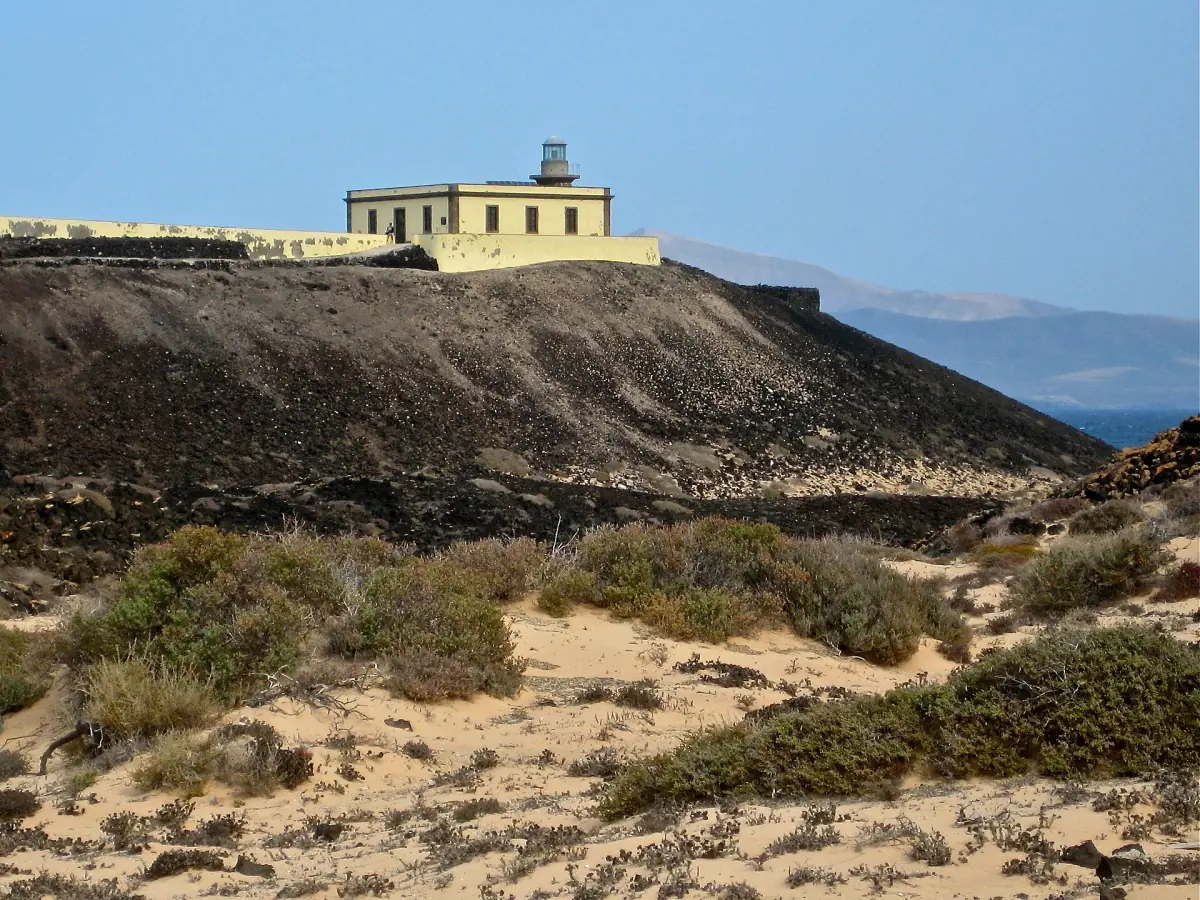
The small island off Corralejo can only be visited with a permit. The ferry takes around 20 minutes, according to one operator. The permit, the ferry fare and a possible future fee are three separate things.
Isla de Lobos guide →Our picks: across the island
The south by jeep, the north on foot and the east coast by catamaran.
Hand-picked tours, booked through GetYourGuide. Prices are indicative starting prices in euros (as of October 2026). Tap a tour for live availability and the current price in your currency.
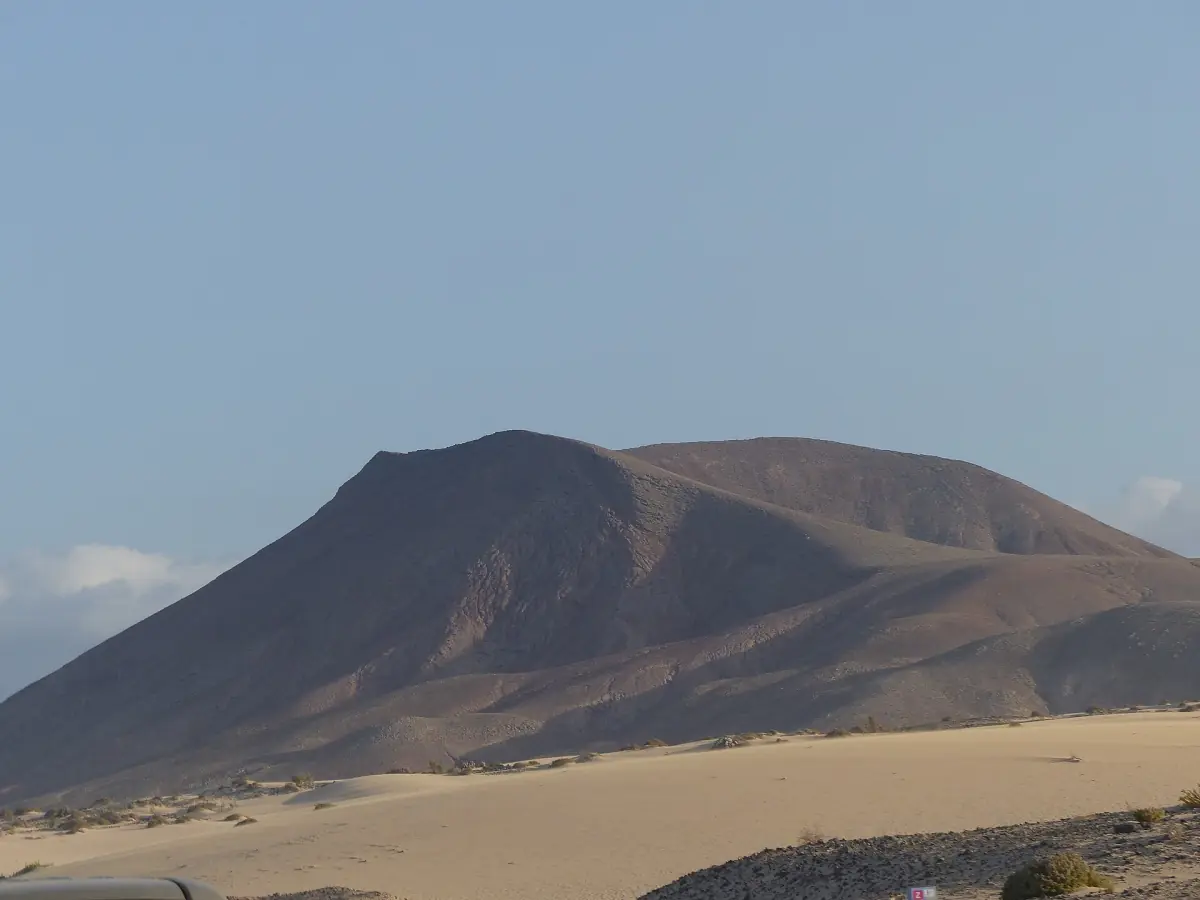
Wild North and Corralejo from the south
Hotel pick-up and return, a guide and a hike are included. Food and drinks are not.
Check availability →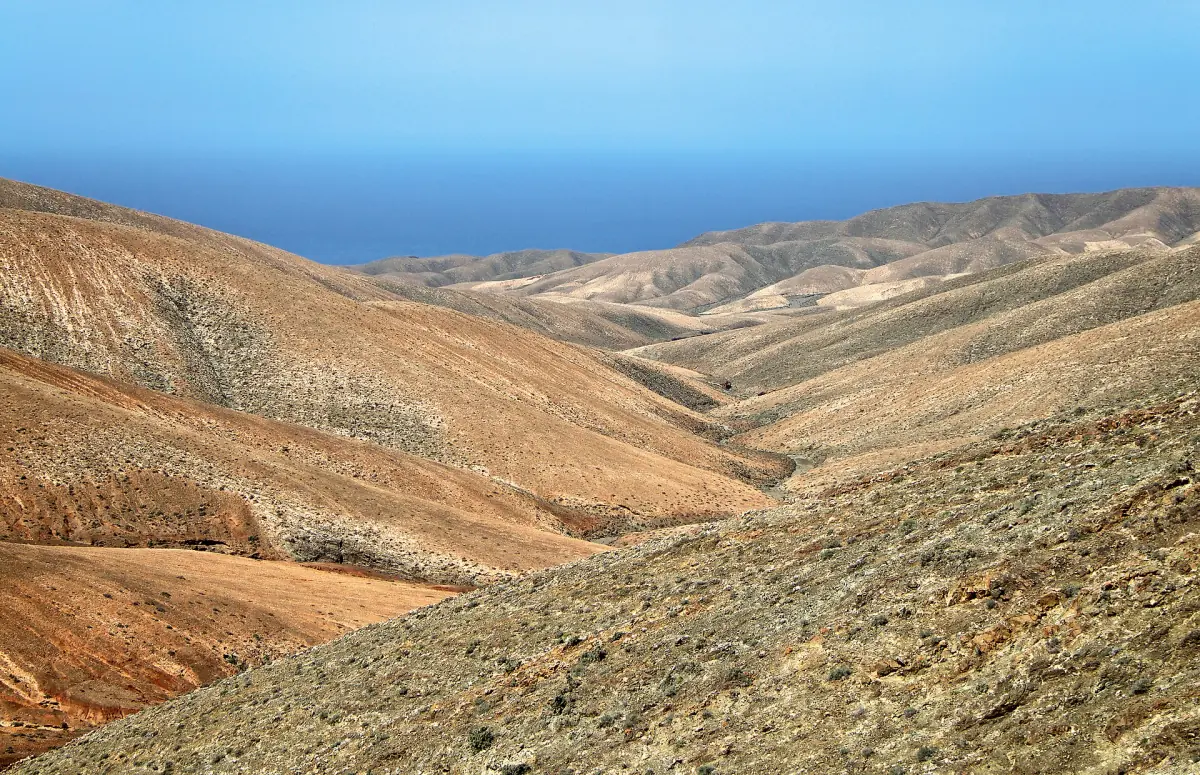
Cofete Beach jeep safari
Hotel transfer in the south, a jeep with a professional driver and a guide are included. Lunch is not.
Check availability →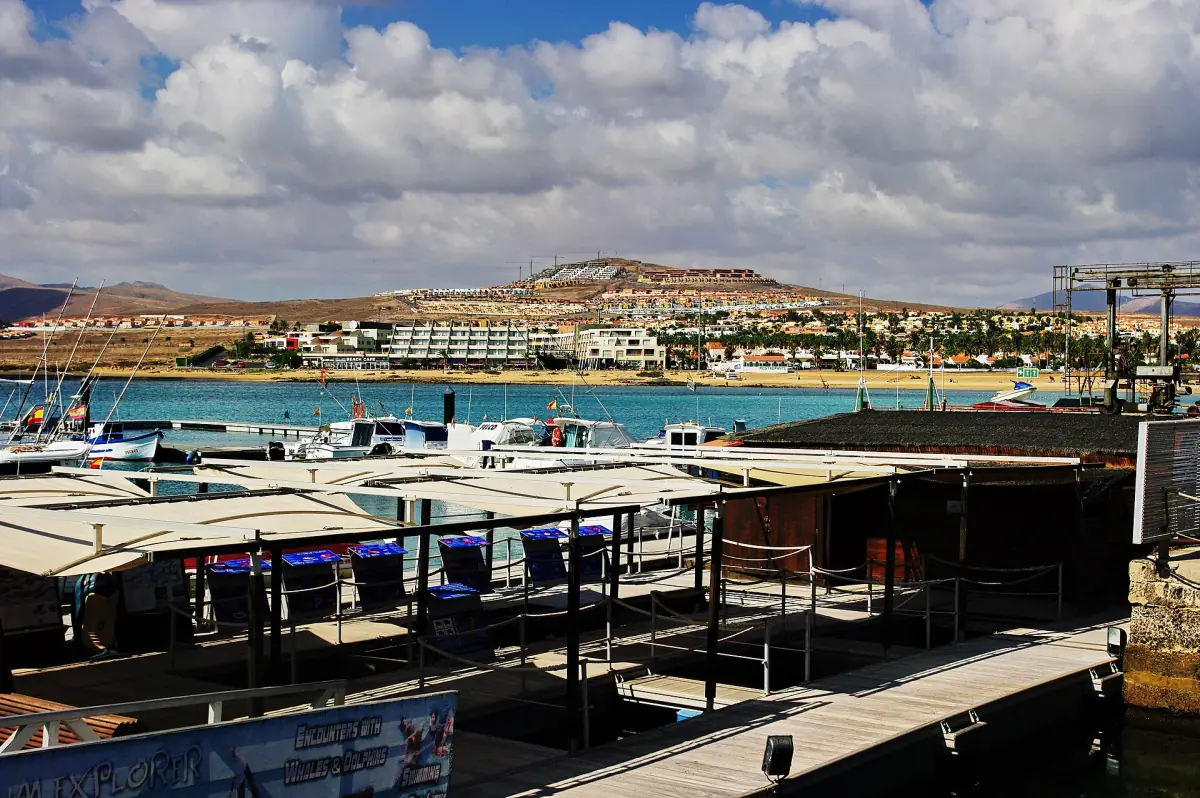
Catamaran sailing from Caleta de Fuste
A paella lunch with salad, Canarian potatoes and fruit, plus water, soft drinks, beer and snorkelling gear. Hotel transfer and other drinks are extra.
Check availability →Fuerteventura tours and day trips
Boat trips, jeep safaris, dune visits and ferry tickets, with live prices and availability.
The centre and the east coast (5 to 8)
A historic village, a viewpoint, a resort bay and working salt pans.
5. Betancuria
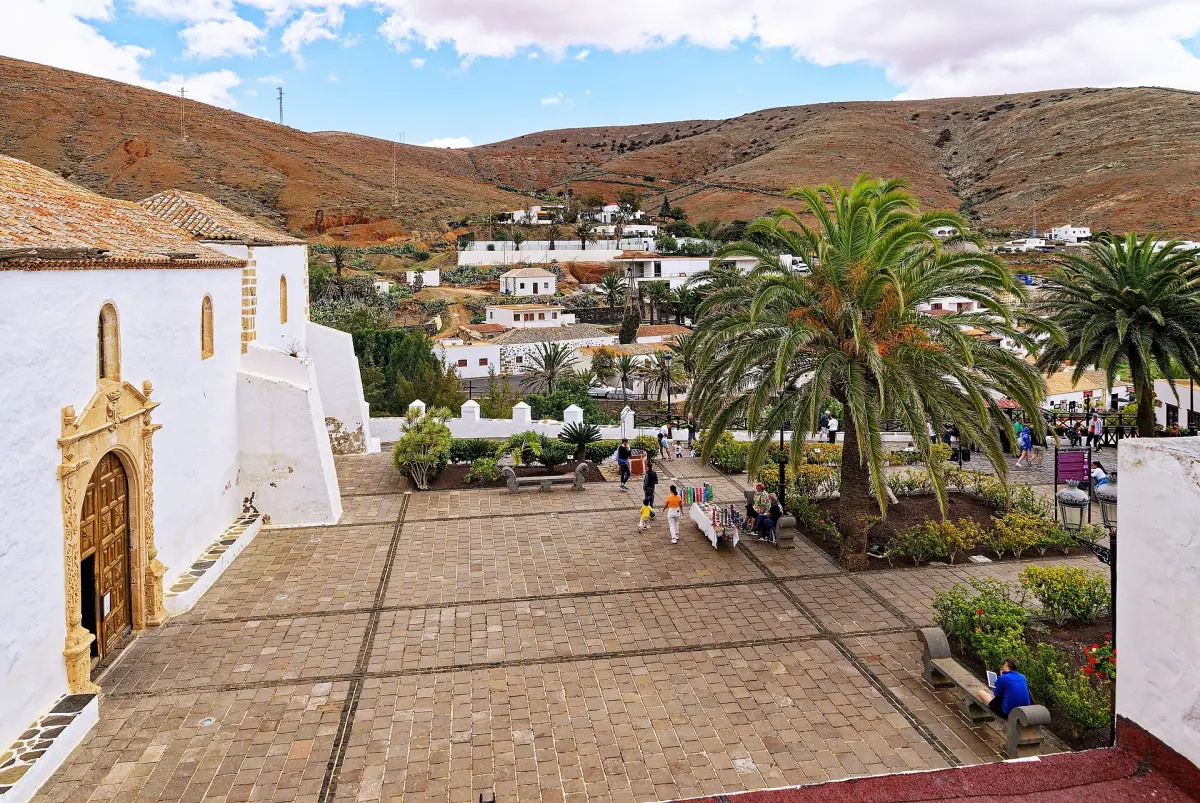
The village was founded around 1404 and later became the island's capital. It sits in an inland valley, partly for defence. The church of Santa María dates back to about 1410, but the buildings were badly damaged in a raid in 1593. Visiting hours and prices for the church are not fixed here, so check on the day. The Morro Velosa viewpoint above the valley is being rebuilt. Works began in September 2025 and the island council expected to finish before the end of 2026, so do not plan a stop there without checking.
Betancuria guide →6. Mirador Las Peñitas
The viewpoint is 338 m high and has parking. From Vega de Río Palmas, the signed trail SL-FV-27 leads to the Peñitas dam. Stay on the paths, do not feed animals and do not take or stack stones.
7. Caleta de Fuste
Playa del Castillo lies in a bay behind a harbour mole, which gives it a sheltered position. Sheltered does not mean calm every day, so look at the flags. Bus line 3 runs from the capital to Caleta de Fuste, with a published fare of €1.45.
Caleta de Fuste guide →8. Salinas del Carmen
Traditional salt production is still active here, with a museum south of Caleta de Fuste. Adults pay €6, children €3, and ages 0 to 3 are free. The museum's own site lists 10:00 to 18:00 from May to October and 09:30 to 17:30 from November to April. A central museum listing gives 10:00 to 18:00 all year, so arrive well before closing. The ticket desk shuts 45 minutes earlier.
The west coast and the cheese museum (9 to 12)
Fishing villages, a lighthouse, sea caves and a museum in Antigua.
9. El Cotillo
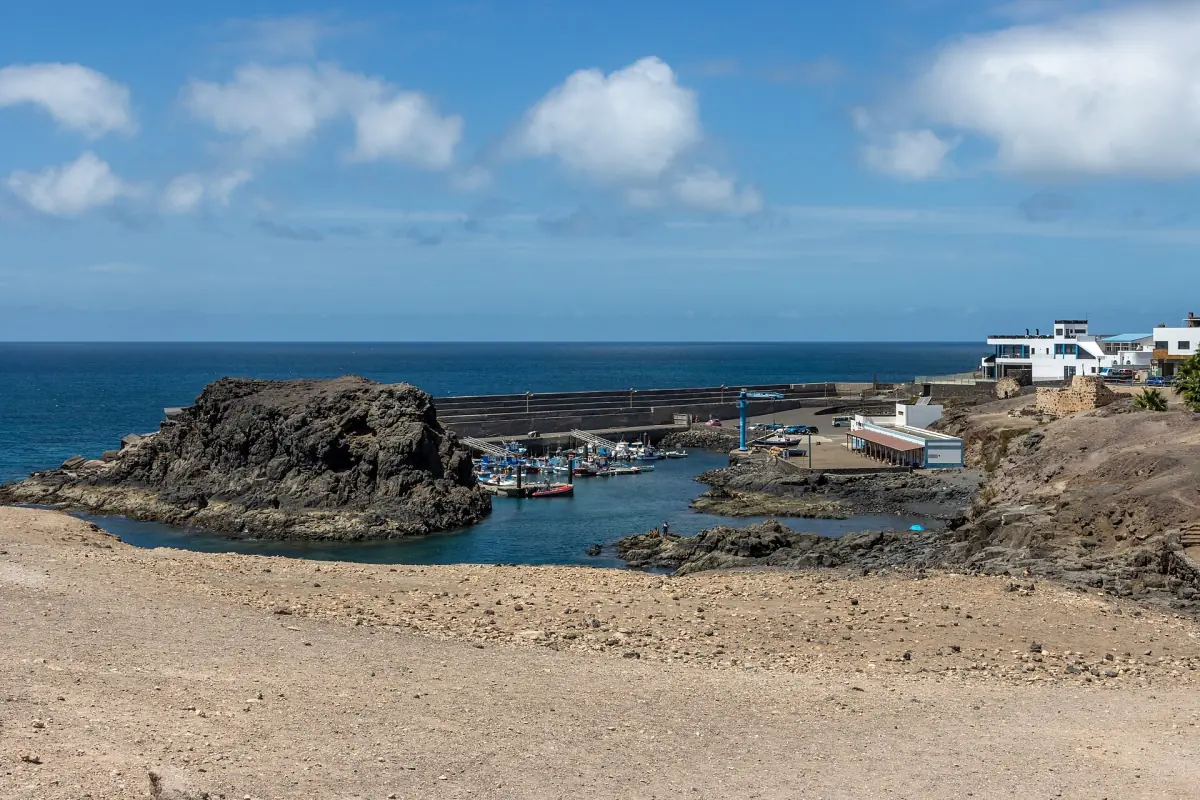
A fishing village on the north-west coast, in the municipality of La Oliva. The tourism service treats the lagoons and the surf spots as different places. Surf, kite, SUP, windsurf and wingfoil schools operate here. That does not make every beach suitable for beginners.
El Cotillo guide →10. Faro del Tostón
The lighthouse group north of El Cotillo has towers from 1897, 1955 and 1986. The second is 13 m high and the third 37 m. The fishing museum has been open only now and then, so do not count on going inside. Parking is mentioned, but no fee.
11. Ajuy
A natural monument with caves, a fossil dune and old lime kilns at the access path. Check the conditions on the day, including the sea state, before you walk down.
12. Museo del Queso Majorero in Antigua
A cheese museum with a mill and a garden. Adults pay €5, children €3, and ages 0 to 3 are free. It opens daily, 10:00 to 18:00 from May to October and 09:30 to 17:30 from November to April, and the ticket desk closes 45 minutes before. A combined ticket with the salt museum and the mill costs €12.50 for adults and €7.50 for children. A tasting costs extra.
Getting around
Distances are long, and a car is the easiest way to link the stops.
Buses leave from the capital for Caleta de Fuste (line 3) and Corralejo (line 6), and they also serve the airport. Taxis wait at the signed rank outside the terminal. If you rent a car, one provider lists a minimum age of 21 and a licence held for at least 2 years. Terms differ by company, so read yours. A ferry may carry a vehicle, but that does not mean your rental company allows it on another island. Details are on the airport page.
For the weather on the island, see the monthly guide. Check the current warnings and forecast before you go.
Go deeper
Guides for the places above.
Corralejo
The harbour town, the dunes and the ferries.
Isla de Lobos
Permit, ferry, the trail and the beach.
Betancuria
The old capital in its valley.
Caleta de Fuste
A sheltered bay and a marina.
El Cotillo
Lagoons, surf and the lighthouse.
Beaches of Fuerteventura
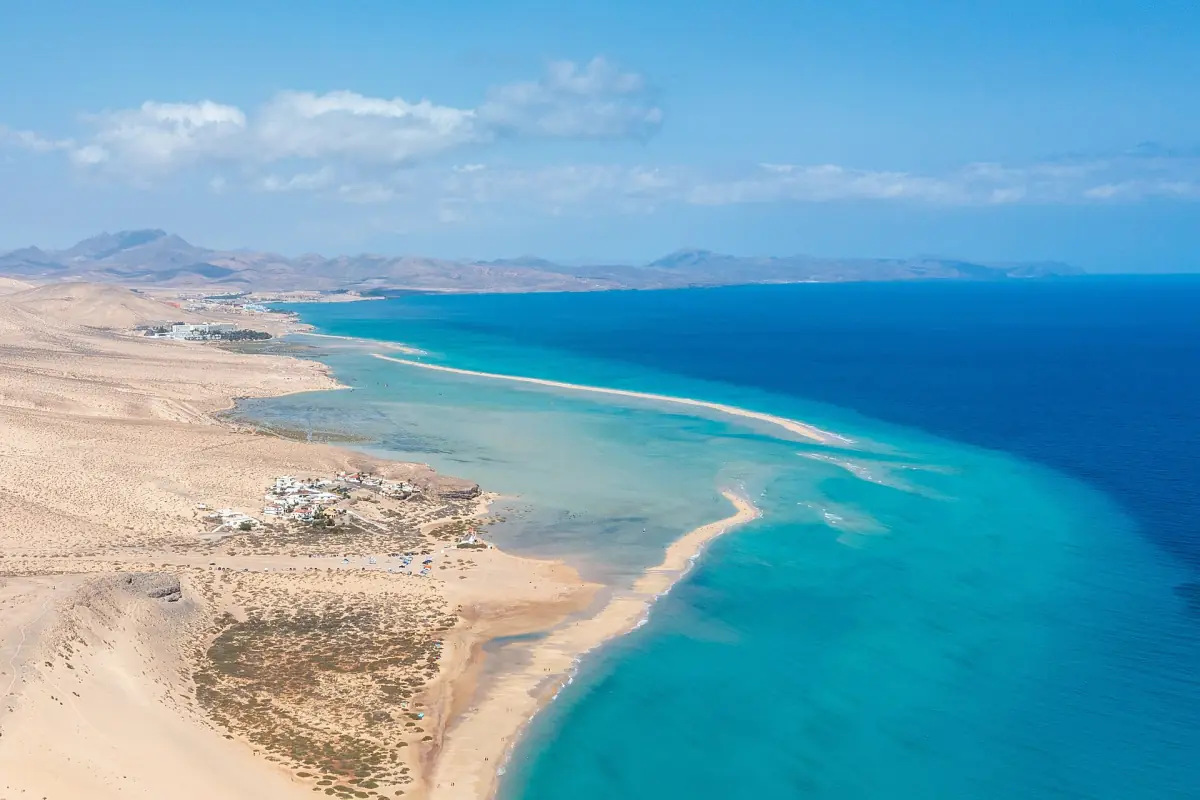
Town beaches and island favourites.
Fuerteventura sights: frequently asked questions
Can I see Fuerteventura from Puerto del Rosario in one day?
You can see parts of it. The north (Corralejo and the dunes) and the centre (Betancuria and Antigua) are different directions, so most people pick one. Do not plan all twelve places in a single day.
Do I need a permit for Isla de Lobos?
Yes. Visits need a permit, and the island council links its application to the LobosPass portal. One ferry operator says applying yourself is free and offers an optional €2 processing service. See the Isla de Lobos page for how it works.
Is Morro Velosa open?
Do not count on it. The island council began rebuilding the viewpoint in September 2025 and put the museum fit-out and café out to tender in August 2026. Older descriptions that mention an exhibition and a café do not show a reopening.
Which sights are free?
The sculptures in Puerto del Rosario cost nothing, and the Casa Museo Unamuno has free admission on weekdays. For the dunes, the official visitor information gives no entry fee. Rules can change, so follow the signs on site.
Can I get to Corralejo by bus from the capital?
Yes, line 6 connects the two, with a published fare of €3.40 each way in 2026. The airport buses serve the capital, so travellers from the airport change there. Check the current timetable before you go.